Be yourself; Everyone else is already taken.
— Oscar Wilde.
This is the first post on my new blog. I’m just getting this new blog going, so stay tuned for more. Subscribe below to get notified when I post new updates.
Be yourself; Everyone else is already taken.
— Oscar Wilde.
This is the first post on my new blog. I’m just getting this new blog going, so stay tuned for more. Subscribe below to get notified when I post new updates.
I made a strong cross-classrooms connection with something I read recently for my Teaching Writing class. Yo quiero to talk about it con you. It’s about what I just did in the previous sentence. In the book Naming What We Know, the author of section 4.6 addresses language, but not language as the words, word choice, structure, etc. Rather, the author discusses language as a living and changing entity, which I connected to my Linguistics class. You see, languages are constantly evolving/devolving, adding new words and perhaps leaving a few behind. Not only that, but the same language can be spoken and written very differently in different parts of the world. Just look at all the different dialects of English throughout the United States!
As teachers, this is important to keep in mind. For one, we might find a job in a different part of the country, or even the world, where our language is not the same. But that doesn’t mean that it is wrong. That is a prescriptive mindset, which can be damaging when grading a work by someone who doesn’t speak or write the same way that we might. This is the mindset that linguists try to avoid. As teachers, we should try to be descriptive, Look at WHAT is being said and HOW, rather than whether or not it is actually correct.
Now, I hear what you are saying, those of you who must grade formal papers. Yes, there are certain rules that should be followed. But these rules are more like guidelines anyway, and rules can always be bent and twisted to fit our needs (within reason). When entering a new area, we must discover how the people speak, and especially how our students speak, to be able to grade them accurately and fairly. No language is universally spoken, so we must be diligent to learn the lexicon of the area before we can judge the writing from there.
You step out onto the stage, full costume, ready to take on the role of a new individual. Spotlights bright, music playing, audience applauds. You are ready to perform!
Now imagine that same feeling, but sitting at a desk, with no audience, and the only light is your desk lamp shining brightly onto the clean sheet of paper. There can still be music playing though. (highly recommended). Pen in hand, you are, once again, ready to perform. That’s what writing is. You take on the persona of someone with a purpose within their work, an objective needed to be achieved through just words on paper.
I’ve seen many similarities between people’s writing and their performance on a stage, especially in the realm of personal review. People tend to judge themselves harshly, whether it be their appearance, singing, etc. People hate watching themselves on stage for various reasons (I know I do). Their tone, voice, perhaps even line delivery will bother them, and they struggle to see any positives, even the most talented of performers. Writers act the same way. They are constantly viewing and reviewing their work, looking to make it better. However, many writers struggle to see the positives of their writing. It’s easy to pull out the negatives and repair them, but giving yourself a pat on the back for their positive qualities too
I was going to type this post on my phone to make a point, but it was taking too long and I missed my physical keyboard.
Anyway, phones, am I right? I doubt anything in history has been both so useful and so hindering to a generation of people. You carry a music-playing, direction-giving, messaging/calling capable computer in your pocket, a digital Swiss army knife. And yet, people still go out to dinner and stare at a screen. You can connect to people across the world while disconnecting from people across the table. While this negative outlook on technology is popular (looking at you Boomers), I believe that technology does a whole lot more good for society than bad, even cell phones. As a teacher, I hope to be able to effectively integrate technology into my classroom, which means I must teach digital literacy.
Students are growing up in an age where digital literacy is a needed skill, so what better way to do so than with technology they are comfortable with? Ed Turner, author of The Ethics of Digital Literacy, tells a story about a teacher, Lauren, who wants to allow the use of the students’ phones in her New York classroom to teach lessons. She made collaborative lesson plans that incorporated the phones in meaningful ways. Once students can get past the distractions that come with cell phones, there is much learning to be had. In the high school that I went to, there was a strict “no phones” policy, and I understand that point of view. They are distracting, even to higher level students. However, perhaps part of teaching digital literacy is teaching students when to use technology, along with why and how (i.e. self-control when they feel the buzz in their pocket). As teachers, we should take steps, like Lauren did, to integrate technology that students are already familiar with.
“Ok boomer.”
A new catchphrase brought about by the newest generation, poking fun at the Baby Boomers. This came about partially because of the technological chasm between the two generations. Despite being part of that new generation, I will admit that technological growth can exceed our ability to learn the new skills to go along with them. Even I have trouble with new apps and media, and I have practically grown up with it. That being said, I, along with the other new teachers who are entering the field, will need to adapt to ever-increasingly difficult and complex technology that will enter our classrooms and curriculum. While our students may become the experts on how to operate the tech, we must be the facilitators to show them when and how to use it.
This is where Maha Bali’s article comes in, “Digital Skills and Digital Literacy: Knowing the Difference and Teaching Both.” The two main topics she discusses are technology in the real-world and using judgement online. These are two very difficult lessons to teach without compromising the safety of our classrooms, which should be the number one priority. And, while I agree with Bali when she says that we shouldn’t be “throwing students into public domains” because of the potential risks, we must also recognize that, coe graduation, that’s pretty much what we’re going to do. On top of that, students will most likely be involved online to some capacity anyway, beit through social media or video games. There will always be problematic users online who make the environment unfriendly, so I believe the best approach is to teach students how to a.) respond to this conflict and b.) avoid becoming the problem.
It is important to remember that online argumentation is completely different than face-to-face argumentation. Online, there is so much potential for misunderstanding, especially since most discussion takes place using just text. It’s hard to discuss concisely when so much can be lost in translation. Overall, the most important skill we can teach students to use online is precise language. They should read and reread everything before they post it, and they should try to read from the perspective of audience members coming from different cultural perspectives.
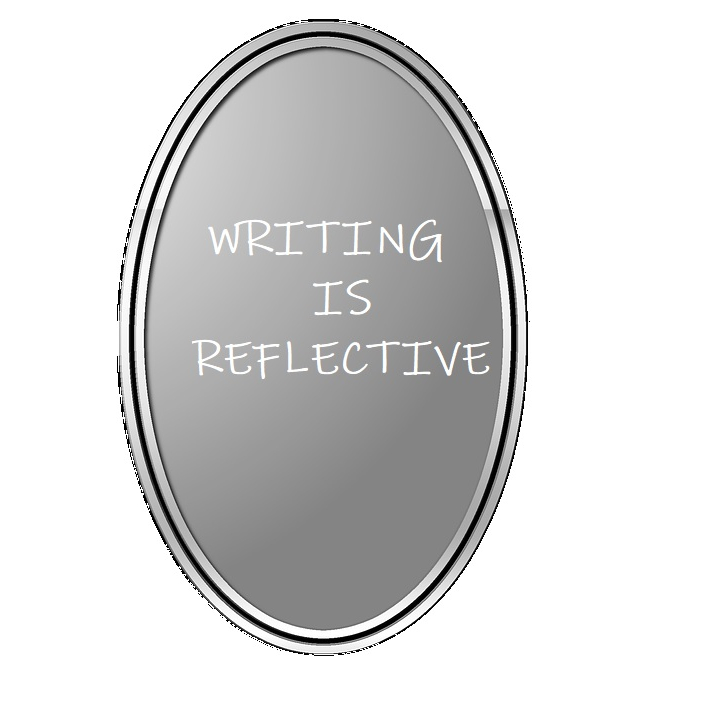
Right now, as I’m writing this blog, I’m not just writing for my audience. I am also writing for myself. In a way, I am part of the audience. I’ll proofread it before publishing, maybe make a few corrections or change some words. I might even change whole sentences. And sure, this will be posted on a website where everyone with internet access can read it. But writing is not written wholly for the audience, even when it is made public.
While reading the book Naming What We Know: Threshold Concepts of Writing Studies, I made it to section 3.1 which focuses on identity as a writer. More specifically, the authors focus on how writing develops our identity progressively. The statement that stood out to me is as follows, “The act of writing, then, is not so much about using a particular set of skills as it is about becoming a particular kind of person, about developing a sense of who we are” (51). This is something that I completely agree with, and yet, the authors does not fully meet my needs in regards to this statement. For the rest of this section, they focus on how our writing to OTHERS, and not OURSELVES. They discuss how writing can reflect our identities, but not how writing can be reflective for us as the writer.
Personally, I write more to myself than I do to others. By that, I mean that I type out my feelings in a Word Document and read it over hours later. Most of the time, exit without saving, to let go of whatever problems that may have been spelled out in those pixels. Writing can be whatever we want it to be, including therapeutic. Strangely, the weight of my problems is lifted, sometimes significantly, after having that conversation with myself. Many teachers attempt to make their students complete journals, and while I’m sure many of them are successful, I think giving students prompts to complete within those journals takes the individuality out of the reflective writing. I hope that in my future classroom, I can let my students write to help themselves mentally and emotionally, as I have. I might try giving them an empty binder in the beginning of the year. They can decorate it however they see fit. Whenever they feel as though they need to let out some feelings, they can write it down and stick it in the binder. At this point, every piece of writing, drawing, etc., should be saved. Near the end of the year, they will reread the whole binder in class. Perhaps we could even do this as a class in a restorative circle. They may share to their hearts’ content. Whatever they feel they must get rid of, they throw away (Recycle. Go green). Anything they wanna keep, they keep. Not only will this (hopefully) lower their stress and help them through problems, but will also keep them writing. It will develop their identity as a writer to themselves, so that they will be comfortable sharing their other work with the world.
This is an example post, originally published as part of Blogging University. Enroll in one of our ten programs, and start your blog right.
You’re going to publish a post today. Don’t worry about how your blog looks. Don’t worry if you haven’t given it a name yet, or you’re feeling overwhelmed. Just click the “New Post” button, and tell us why you’re here.
Why do this?
The post can be short or long, a personal intro to your life or a bloggy mission statement, a manifesto for the future or a simple outline of your the types of things you hope to publish.
To help you get started, here are a few questions:
You’re not locked into any of this; one of the wonderful things about blogs is how they constantly evolve as we learn, grow, and interact with one another — but it’s good to know where and why you started, and articulating your goals may just give you a few other post ideas.
Can’t think how to get started? Just write the first thing that pops into your head. Anne Lamott, author of a book on writing we love, says that you need to give yourself permission to write a “crappy first draft”. Anne makes a great point — just start writing, and worry about editing it later.
When you’re ready to publish, give your post three to five tags that describe your blog’s focus — writing, photography, fiction, parenting, food, cars, movies, sports, whatever. These tags will help others who care about your topics find you in the Reader. Make sure one of the tags is “zerotohero,” so other new bloggers can find you, too.

 Ryan's Teaching Writing Blog